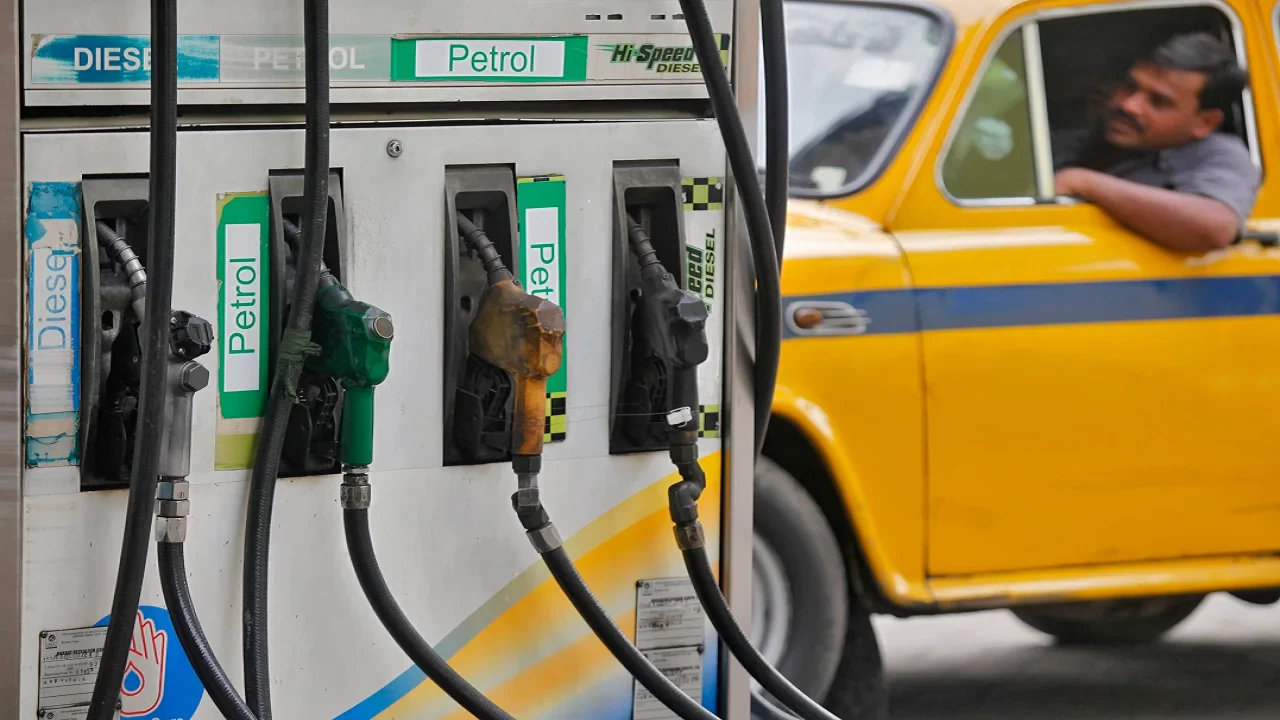
India on Friday cut the excise duties on petrol and diesel by Rs 10 per litre each, as geopolitical tensions involving the US, Israel and Iran fuel fears of a sharp rise in global oil prices, bringing petrol duty down to Rs 3 per litre and eliminating it on diesel.
This step comes as global crude oil prices continue to climb sharply. India’s crude basket is currently nearing $149 per barrel, driven largely by instability in West Asia. In recent weeks, the ongoing geopolitical conflict has unsettled global energy markets, significantly increasing costs for oil marketing companies (OMCs).
Petroleum Minister Hardeep Singh Puri detailed a post on X, stating that “international crude prices have surged dramatically from about $70 per barrel to roughly $122 within a month. As a result, fuel prices have risen worldwide, with increases of approximately 30–50% in Southeast Asia, 30% in North America, 20% in Europe, and up to 50% in parts of Africa.”
He further wrote that the government has absorbed a substantial loss in tax revenue to reduce the financial burden on oil companies, which are currently facing losses of around Rs 24 per litre on petrol and Rs 30 per litre on diesel. Additionally, an export tax has been introduced to discourage refiners from selling fuel abroad while domestic prices remain under pressure.
Reassuring the public, the minister emphasised that India remains resilient in navigating global uncertainties and that there is no proposal under consideration for a nationwide lockdown. He urged citizens to remain calm and avoid spreading misinformation, warning that rumours in such situations can be harmful.
Despite the duty cut, consumers may not see an immediate drop in fuel prices. Instead, the measure appears aimed at easing the strain on OMCs coping with elevated input costs.
Reflecting the mounting pressure, private fuel retailer Nayara Energy had already raised petrol prices by Rs 5 per litre and diesel by Rs 3 per litre just a day before the government’s announcement.
However, the timing of the decision is also politically significant, with several key state elections approaching. A sharp increase in fuel prices could intensify public dissatisfaction over inflation.
Meanwhile, the Strait of Hormuz remains a critical route for global energy shipments, with about 20–25 million barrels of oil and roughly 10 billion cubic feet of gas passing through it daily before the conflict intensified, accounting for nearly one-fifth of global seaborne energy trade.
India’s reliance on this route is considerable, with approximately 40–50% of its crude oil imports, around 2.2 to 2.8 million barrels per day, transiting through the strait. The country also depends heavily on West Asia for liquefied natural gas (LNG), sourcing around 16–17% from nations such as Qatar and the UAE.
The government also recently announced a 25% increase in LPG production and urged households not to engage in panic buying, assuring that supply remains stable.