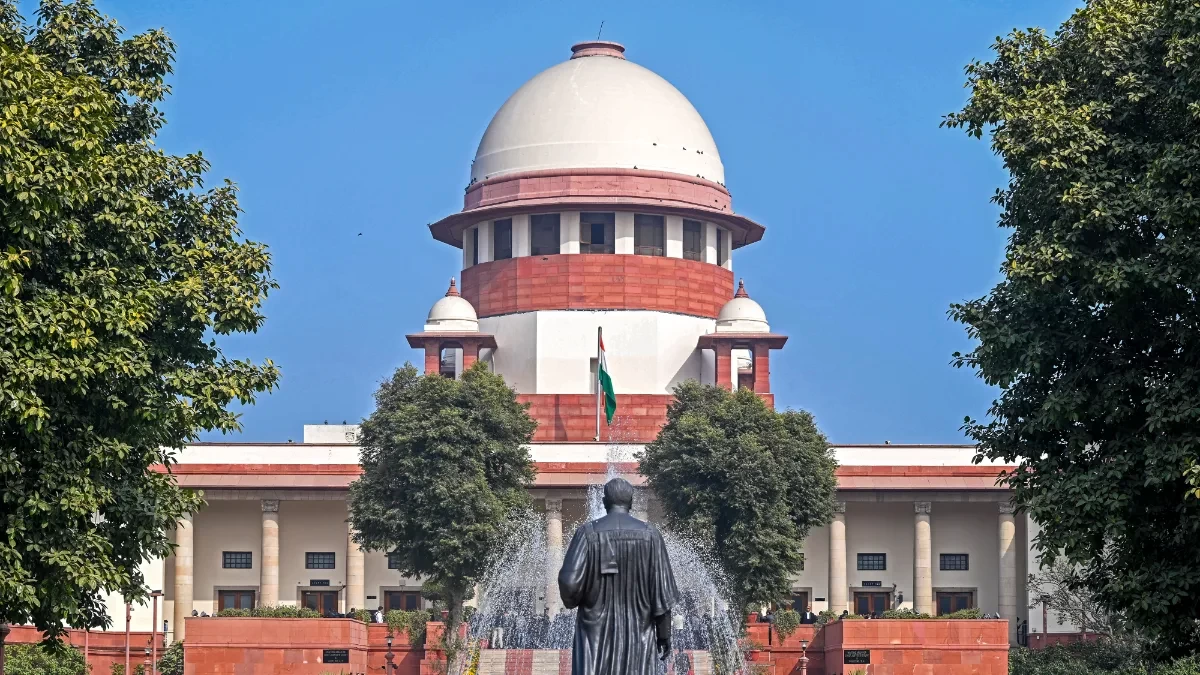
The Supreme Court on Wednesday declined to adjourn proceedings in a high-stakes constitutional dispute between the Enforcement Directorate (ED) and the State of West Bengal, arising out of alleged obstruction during a raid at the offices of political consultancy firm I-PAC.
A Bench comprising Justices Prashant Kumar Mishra and N.V. Anjaria rejected a request made by the State seeking additional time to respond to a rejoinder affidavit filed by the ED. The court made it clear that parties cannot dictate how proceedings are to be conducted, asserting its authority to consider all materials placed on record.
At the outset, senior counsel appearing for West Bengal urged the court to defer the hearing, arguing that the ED’s rejoinder contained fresh assertions that required a detailed response. The plea was strongly opposed by the Solicitor General, who contended that the State had already been afforded sufficient time and that the adjournment request appeared to be a delaying tactic.
Rejecting the request, the Bench indicated that it would proceed with the matter and allow the ED to commence arguments, with the State being granted an opportunity to respond subsequently. When the State suggested that the rejoinder be set aside if the hearing were to continue, the court firmly declined, observing in substance that it would not disregard any material already on record and that litigants cannot prescribe the manner in which the court evaluates submissions.
The exchange underscored the court’s disapproval of repeated adjournment attempts, with the Bench remarking that the proceedings appeared to be turning into a contest over delay. It further signalled that the sensitivity of the matter, as claimed by the State, could not by itself justify postponement.
Subsequently, the State pressed for its preliminary objections—particularly on the maintainability of the ED’s petition—to be heard first. While this was initially resisted by the ED, the court permitted arguments on preliminary issues to proceed alongside the merits.
The case stems from allegations by the ED that its officials were obstructed during a search operation at I-PAC’s office in Kolkata, reportedly linked to a money laundering investigation. The matter has evolved into a broader constitutional contest, raising questions about the powers of central investigative agencies and the limits of state intervention.
The proceedings remain ongoing and are expected to have significant implications for the balance of authority between central agencies and state governments, particularly in politically sensitive investigations.