U.S. President Donald Trump signed an executive order on Wednesday aimed at prohibiting transgender women and girls from competing in women’s sports, stoking a massive debate across political and social circles. Framed as a move to restore fairness in sports, the order has drawn both praise from supporters and sharp criticism from those who see it as discriminatory against transgender individuals.
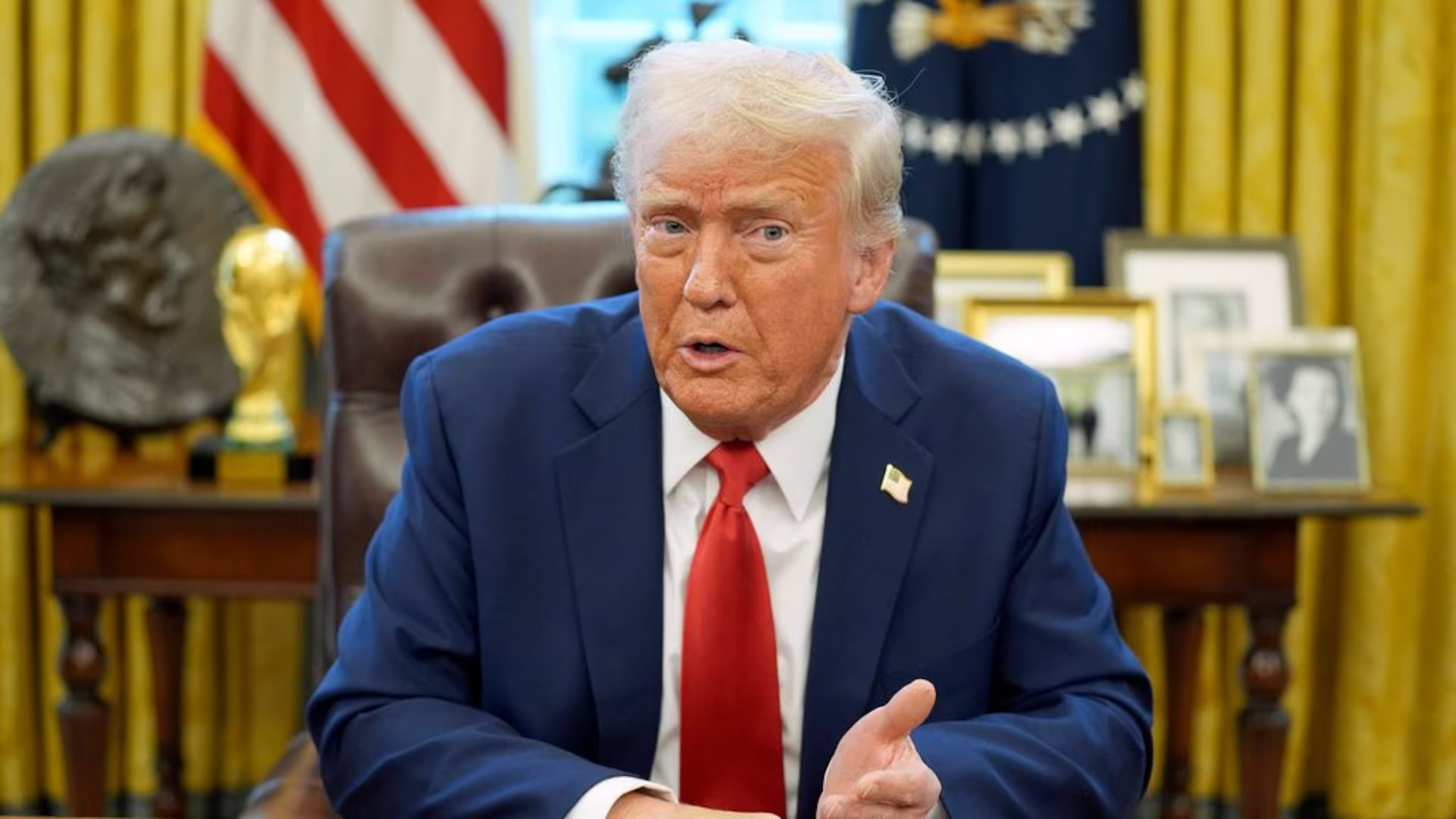
The executive order, titled "Keeping Men Out of Women’s Sports," was signed on National Girls and Women in Sports Day, aligning its timing with the order’s intent. Speaking from the White House, Trump emphasised his administration’s commitment to protecting cisgender women athletes, declaring, “women’s sports will be only for women.”
The new policy stipulates that schools failing to comply with the directive will face a withdrawal of federal funding. To enforce the order, the Education Department will reinterpret Title IX, the landmark 1972 law that prohibits sex-based discrimination in schools receiving federal funding. Under Trump’s direction, Title IX will focus on biological sex rather than gender identity.
The order also mandates that the U.S. State Department lobby the International Olympic Committee (IOC) to adopt similar policies for international sports events. Trump’s administration argues that eligibility for women’s sports should be determined based on biological sex, not gender identity or testosterone levels, pushing for stricter global regulations.
This executive order continues the trajectory of Trump’s first-term policies, which restricted the rights of transgender individuals in areas like the military and healthcare. In contrast, the Biden administration had extended protections for transgender individuals, including applying Title IX protections to cover gender identity and sexual orientation. However, a recent federal court ruling vacated these protections, presenting an opportunity for Trump’s administration to reverse the policy.
Candice Jackson, deputy general counsel for the Education Department, reaffirmed the administration’s stance following the signing of the executive order. She said the department would “prioritize Title IX enforcement,” underscoring the administration’s belief that the move restores the original intent of Title IX, which aimed to protect opportunities for cisgender women in sports.
The order has already sparked immediate legal challenges, with several states, including Connecticut, preparing to contest the policy in court. Connecticut Attorney General William Tong denounced the order, calling it “lawless” and “draconian,” urging states to “stand together and fight back” against the policy.
Civil rights organizations have expressed concern over the potential social and psychological impact of the order, especially on transgender youth. These groups argue that the policy could lead to invasive testing of athletes and further marginalize transgender individuals in the world of sports. They warn that it perpetuates harmful stereotypes and discriminatory practices against transgender athletes.
The executive order also extends its impact to collegiate sports, where the National Collegiate Athletic Association (NCAA) could face pressure to align its policies with the federal directive. Earlier this year, NCAA President Mark Emmert called for legal clarity on the matter, suggesting the organization would align with federal law. However, Trump’s order could prompt the NCAA to reconsider its current policy, which allows transgender women to compete in women’s sports with certain eligibility requirements.
Conservative lawmakers and advocacy groups have welcomed the executive order, asserting that it ensures fairness in women’s sports by recognising biological differences between men and women. Representative Nancy Mace, a Republican from South Carolina, celebrated the order as a “victory” for female athletes, stating it “defends the rights of female athletes who have worked their whole lives to compete at the highest levels.”
However, critics argue that the policy reinforces harmful stereotypes and deepens the marginalisation of transgender athletes. Amnesty International condemned the order, calling for the protection of transgender individuals’ right to participate in sports with dignity and safety. Karla Gonzales Garcia, Director of Gender, Sexuality, and Identity Programs at Amnesty International, emphasised the importance of ensuring transgender individuals are treated equally in all aspects of life, including sports.
Opponents of the executive order also highlighted the social consequences of excluding transgender athletes from school sports. Tyler Hack, executive director of the Christopher Street Project, a nonprofit that advocates for transgender rights, argued that the order would further segregate transgender children from their peers. He added, “It’s a moment where we need everyone to stand up and be vocal.”